
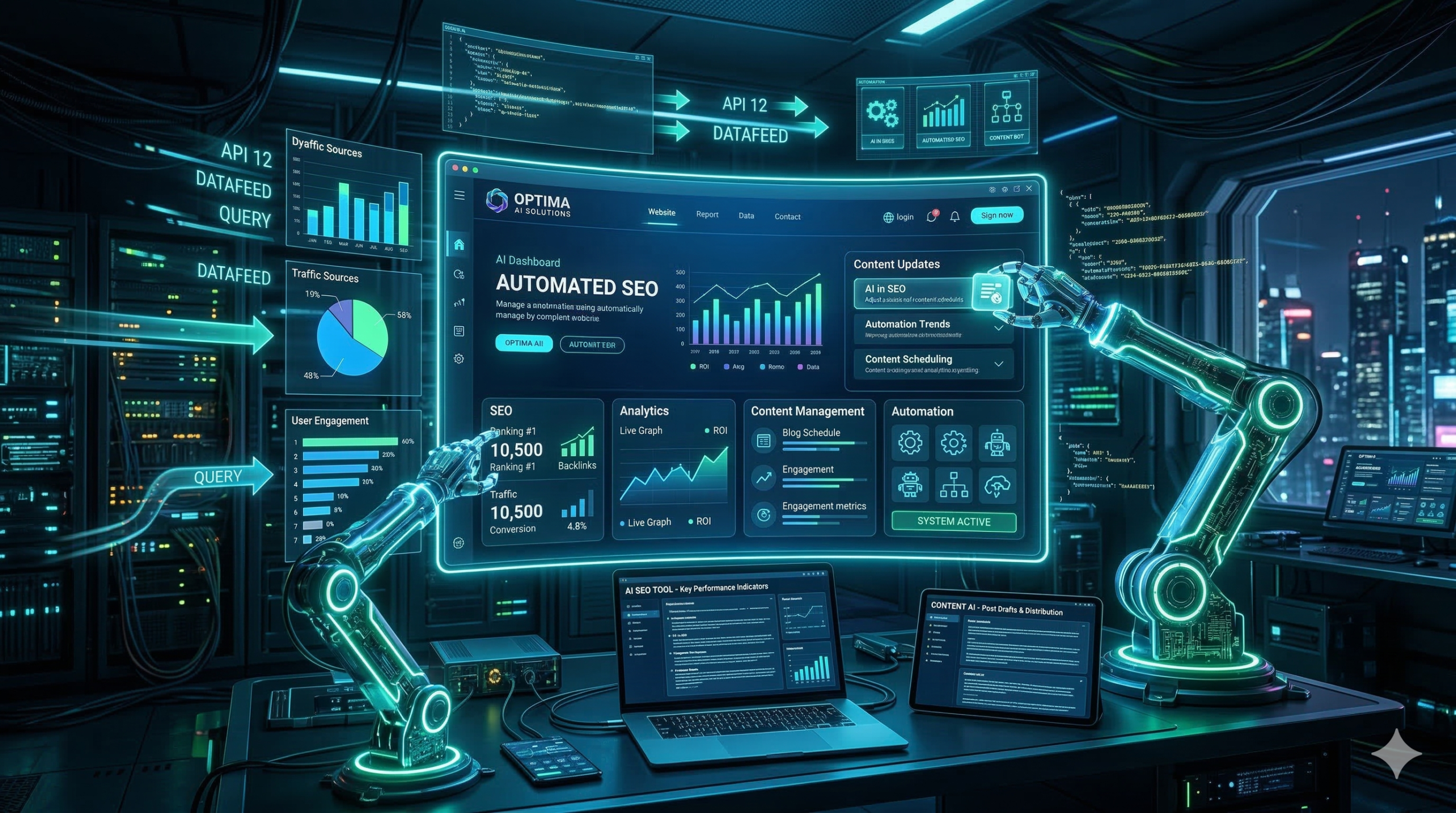
Artificial Intelligence (AI) has become a game‑changer for website automation. Today, website owners and digital marketers no longer need to perform repetitive tasks manually—AI tools can handle everything from content personalization and SEO optimization to customer support and analytics. With the right AI automation tools, a website can practically run itself, letting you focus on strategy, creativity, and business growth.
Website automation isn’t just a luxury anymore—it’s expected. From e‑commerce shops to blogs and corporate sites, AI tools help reduce workload, increase efficiency, and improve user experience. In this guide, we’ll explore the top AI tools for website automation in 2026, why they matter, what they do, and how you can use them to boost your online presence.
What Is Website Automation?
Website automation refers to using software and tools that automatically perform tasks that would otherwise require manual effort or continuous intervention. These tasks include:
- Automating customer support (chatbots)
- Personalizing user experience
- Automatically generating or optimizing content
- Analyzing user behavior and analytics
- Managing SEO tasks
- Scheduling social posts or emails
AI tools integrate machine learning and data analysis to make these tasks smarter and more effective. Instead of manually updating content, responding to every customer, or guessing which marketing strategy works best, AI systems can do it for you—often faster and more accurately.
Why AI Tools Matter for Website Automation
There are several reasons why AI tools are becoming essential for website automation:
1. Saves Time
Tasks like updating product descriptions, monitoring SEO performance, and responding to FAQs can be automated, freeing up countless hours.
2. Improves User Experience
AI can tailor content and recommendations based on user behavior, which leads to better engagement and higher conversions.
3. Increases Efficiency
AI tools can process massive datasets instantly—something humans would take hours or days to do.
4. Reduces Errors
Humans make mistakes; AI tools follow optimized rules and patterns, reducing incorrect content or oversight.
Now let’s look at the top AI tools available in 2026 that help automate websites.
Best AI Tools for Website Automation
1. ChatGPT (OpenAI) – Automated Customer Interaction & Content Generation
ChatGPT is a powerful AI platform widely used for automating conversation, content creation, and interactive website elements.
Key Uses:
- AI chatbots for customer support
- Automatically generating FAQs and knowledge base content
- Drafting blog posts and web page content
- Giving personalized responses to visitor queries
Using ChatGPT as a website bot helps reduce support costs and respond instantly to user questions day and night.
2. Dialogflow (by Google) – Conversational AI & Chatbots
Dialogflow is one of the leading AI tools for building conversational bots, capable of handling complex user interactions.
Best for:
- Live chat automation
- Customer service bots
- Voice assistants integration
- Advanced conversational flows
The advantage of Dialogflow is deep integration with Google Cloud, making it scalable for even enterprise‑level websites.
3. HubSpot AI – Marketing & CRM Automation
HubSpot has integrated AI directly into its marketing, sales, and customer relationship management platform.
Uses for Website Automation:
- Personalized email and marketing automation
- Predictive content recommendations
- Automated lead scoring
- AI‑powered SEO suggestions
Websites connected to HubSpot can automatically nurture leads and track user behavior without manual setup.
4. Surfer SEO – Automated Content Optimization
Surfer SEO uses AI to analyze search engine data and automatically recommend content improvements.
Key Features:
- SEO scoring and recommendations
- Keyword and content gap analysis
- Competitor insight automation
- Real‑time optimization suggestions
Instead of manually guessing which keywords to use, Surfer provides AI‑based structures that improve search rankings.
5. Zapier – AI Workflow Automation
Zapier isn’t AI in the traditional sense, but it empowers automation by connecting tools and workflows.
You Can Automate:
- New form submissions → add to email list
- New blog posts → auto share to social media
- CRM updates → trigger notifications or campaigns
- Database syncing between apps
Zapier’s AI integrations help website owners automate much of the backend workflow without writing code.
6. Notion AI – Automated Content Planning & Management
Notion AI helps automate content workflows and planning inside Notion workspaces.
Use Cases:
- Auto‑generate article outlines
- Summarize research and notes
- Brainstorm content ideas
- Track automation tasks and content pipelines
For teams or solo creators, Notion AI keeps content systems organized and self‑sustaining.
7. Hotjar + AI Insights – Automated Behavior Analysis
Hotjar detects how users interact with your site through heatmaps and session recordings.
Layering AI insights on top of this allows:
- Predictive analysis of user behavior
- Automatically suggesting UX improvements
- Identifying drop‑off points in sales funnels
- Recommending personalization changes
With AI insights, optimizing your site becomes automated and based on real visitor data.
8. Mailchimp AI – Email & Campaign Automation
Mailchimp uses AI to automate email campaigns and marketing sequences.
Features Include:
- Auto‑segmenting audiences
- Predictive send time optimization
- Emotion‑based subject line suggestions
- Automated follow‑up campaigns
Using AI email automation ensures campaigns stay effective without manual intervention.
9. Jasper AI – Automated Content Drafting
Jasper helps create long‑form content for blogs, landing pages, and website copy.
Best For:
- Writing product descriptions
- Drafting landing page content
- Generating new article ideas
- Repurposing old content effectively
AI drafting saves hours of research and writing effort.
10. Optimizely – AI‑Driven A/B Testing Automation
Optimizely leverages AI to automate website experiments and personalization.
Key Benefits:
- Automatic variation testing
- AI‑selected winning designs
- Dynamic personalization based on user segments
- Insights on what converts best
Instead of manually testing changes, AI chooses the best paths for you.
How to Implement AI Automation on Your Website
Automation can be powerful, but it needs strategy. Here’s how to implement AI tools correctly:
1. Identify Your Goals
Decide what you want to automate first—content, marketing, customer support, or analytics.
2. Select Tools Based on Goals
Match tools with your needs (e.g., ChatGPT for customer support, Surfer SEO for content optimization).
3. Integrate With Existing Systems
Most tools integrate via APIs or plugins (like WordPress plugins). Set them up correctly.
4. Monitor Performance
Track engagement metrics, conversion rates, and user behavior to ensure automation improves results.
5. Iterate and Improve
AI tools learn over time. Collect data and refine automation flows for better performance.
Benefits of Using AI Tools for Website Automation
🚀 Faster Workflow
AI eliminates repetitive tasks, enabling faster content creation and deployment.
💡 Better Decision‑Making
AI provides insights based on data, reducing guesswork.
💬 Improved User Experience
Chatbots and personalization make visitors feel heard and engaged.
📈 Higher Conversions
AI can recommend and implement changes that boost conversions automatically.
⚙️ Scalability
Automation allows websites to handle increased traffic and activity without extra manpower.
Conclusion
AI tools have revolutionized website automation. With free and premium platforms available in 2026, website owners can now automate nearly every task—from live customer support to content optimization and marketing campaigns. These tools reduce workload, improve performance, and deliver a better user experience for visitors.
The result? Smarter websites that work for you 24/7.
FAQs
1. What is AI website automation?
AI website automation uses intelligent systems to automatically perform tasks like customer support, content optimization, user personalization, and more without manual effort.
2. Can AI replace human website managers?
AI can automate many tasks, but human strategy and oversight are still essential for creativity, decision making, and quality control.
3. Are there free AI tools for website automation?
Yes! Tools like ChatGPT, Notion AI, Hotjar (basic), and Zapier (limited workflows) offer free plans that help automate basic tasks.
4. How does AI improve user experience on websites?
AI personalizes content, analyzes behavior, and provides smart recommendations, making the visitor’s experience more tailored and engaging.
5. Is implementing AI tools difficult?
Most modern AI tools offer plugins and integrations that make setup straightforward, even for non‑technical users.





Leave a Reply