
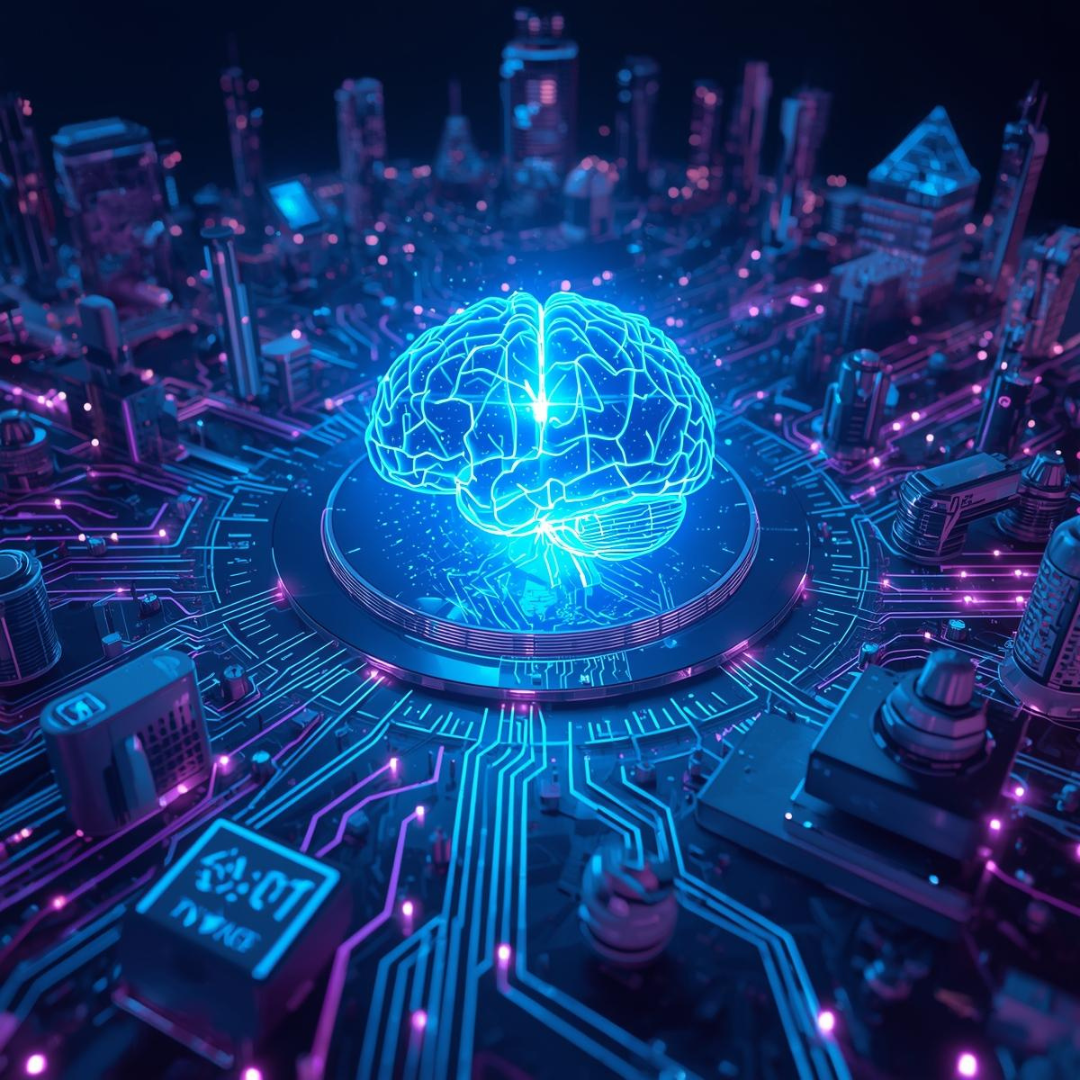
Artificial Intelligence (AI) has become one of the most powerful forces shaping modern technology. Just a decade ago, AI was mostly limited to research labs and experimental software. Today, it powers search engines, smartphones, medical systems, financial services, cybersecurity, and even self-driving cars. AI is no longer simply a futuristic concept—it is actively transforming how technology works, how businesses operate, and how people interact with digital systems.
From automation to predictive analytics, AI is enabling machines to learn from data, make decisions, and perform tasks that once required human intelligence. This technological revolution is accelerating innovation across almost every industry. In fact, global AI investment and adoption have surged dramatically, with AI technologies contributing trillions of dollars to the global economy and becoming integrated into thousands of digital platforms.
In simple terms, AI is changing technology by making it smarter, faster, and more efficient. Let’s explore how this transformation is happening across different sectors.
1. AI Is Automating Complex Tasks
One of the biggest ways AI is transforming technology is through automation. Traditional software follows fixed rules, but AI systems can learn patterns from data and perform tasks automatically.
For example:
- AI-powered chatbots handle customer service queries
- Automated coding assistants help developers write software
- AI systems process large datasets in seconds
Today, about 90% of tech workers use AI tools in their daily work, especially for coding, debugging, and research.
Automation reduces human workload and increases productivity. Tasks that once required hours of manual effort can now be completed within minutes using AI systems.
2. AI Is Revolutionizing Software Development
Software development is evolving rapidly because of AI. Developers now use AI coding assistants that can generate code, fix errors, and suggest improvements automatically.
Some major changes include:
- AI writing and reviewing code
- Automatic bug detection
- Faster software testing
- Smart development environments
AI tools can analyze millions of code examples and generate new programs based on patterns. This dramatically speeds up the development process.
Many companies report that AI coding assistants reduce development time by 30–50%, allowing engineers to focus on creative and complex tasks.
3. AI Is Transforming Cybersecurity
Cybersecurity threats are becoming more advanced every year, and AI is playing a crucial role in defending against them.
AI-powered cybersecurity systems can:
- Detect suspicious network behavior
- Identify malware and cyberattacks
- Monitor systems in real time
- Predict potential threats
AI security systems now detect cyber threats 92% faster than traditional security tools.
These intelligent systems analyze massive amounts of data instantly, allowing organizations to stop attacks before they cause damage.
4. AI Is Changing Healthcare Technology
Healthcare is one of the industries experiencing the biggest transformation because of AI.
AI technology is now used for:
- Medical diagnosis
- Drug discovery
- robotic surgery
- patient monitoring
- medical imaging analysis
AI systems can analyze medical scans and detect diseases like cancer faster than traditional methods. AI-powered robotic systems are also assisting surgeons with precision operations.
In addition, AI virtual assistants are expected to handle around 40% of initial medical consultations, helping doctors focus on complex cases.
This combination of human expertise and AI intelligence is improving healthcare outcomes worldwide.
5. AI Is Transforming Education Technology
Education technology (EdTech) is another area where AI is making a huge impact.
AI-powered learning platforms can:
- Personalize lessons for each student
- Track learning progress
- provide instant feedback
- adapt difficulty levels automatically
More than 300 million students worldwide now use AI-based tutoring systems, which provide personalized learning support 24/7.
AI can analyze student performance and adjust teaching strategies accordingly. This helps students learn more efficiently and improves overall education outcomes.
6. AI Is Powering Smart Devices and IoT
Modern devices are becoming smarter thanks to AI integration.
Examples include:
- Smart home systems
- voice assistants
- intelligent cameras
- wearable health devices
AI-powered devices can recognize voice commands, analyze behavior patterns, and make intelligent decisions automatically.
For instance:
- Smart thermostats adjust temperature based on user habits
- AI cameras detect suspicious activity
- voice assistants answer questions and control devices
AI is essentially turning ordinary devices into intelligent systems.
7. AI Is Revolutionizing Business and Finance
The financial industry relies heavily on AI technology for data analysis and decision-making.
AI systems are used for:
- fraud detection
- algorithmic trading
- risk analysis
- automated customer service
- investment predictions
AI-powered fraud detection systems prevent around 90% of cyber fraud attempts in financial transactions.
Banks also use AI chatbots to handle customer support. These bots answer questions, process requests, and provide 24/7 assistance.
AI-driven financial technologies are making banking faster, safer, and more accessible.
8. AI Is Accelerating Scientific Innovation
Artificial intelligence is also accelerating scientific discoveries.
Researchers use AI to analyze huge datasets and discover patterns that humans might miss.
AI is helping scientists in fields like:
- climate modeling
- materials science
- drug development
- space exploration
Some researchers believe AI could dramatically speed up innovation by automating complex experiments and simulations.
This means breakthroughs that once took years could happen much faster in the future.
9. AI Is Transforming Digital Marketing and Content Creation
AI is changing how businesses interact with customers online.
AI-powered marketing tools can:
- analyze customer behavior
- create personalized ads
- generate content
- optimize marketing campaigns
Companies now use AI to analyze large datasets and predict consumer preferences. This allows businesses to deliver personalized experiences at scale.
AI-generated content is also becoming common in blogging, advertising, and social media marketing.
10. AI Is Reshaping the Technology Industry Itself
AI is not just improving technology—it is reshaping the tech industry.
Companies are restructuring teams and investing heavily in AI development. Some tech firms are even changing their workforce strategies because AI is transforming how work is done.
Conclusion
Artificial Intelligence is one of the most important technological revolutions in modern history. It is transforming industries, improving productivity, and unlocking new possibilities across healthcare, education, finance, cybersecurity, and software development.
AI is making technology smarter, more efficient, and more capable than ever before. Machines are now able to analyze massive amounts of data, learn from experience, and make intelligent decisions in real time.
As AI continues to evolve, it will reshape the future of technology even further. The companies, developers, and individuals who embrace AI today will be the ones leading the next generation of technological innovation.
In the coming years, AI will not just support technology—it will become the core engine driving technological progress.
FAQs
1. What is Artificial Intelligence in simple terms?
Artificial Intelligence is technology that allows machines to learn from data, recognize patterns, and make decisions similar to human intelligence.
2. Why is AI important for technology?
AI improves efficiency, automates tasks, analyzes data faster, and enables smart systems that can adapt and learn.
3. Which industries are most affected by AI?
Healthcare, finance, cybersecurity, education, transportation, and digital marketing are among the industries most impacted by AI.
4. Can AI replace human workers?
AI can automate certain tasks, but most experts believe it will work alongside humans rather than completely replace them.
5. What is the future of AI technology?
The future of AI includes smarter robots, autonomous vehicles, advanced medical systems, and intelligent digital assistants that can handle complex tasks.



Leave a Reply